
2026/2027 DEBATE COACHING
With Mike Bietz
Three ways to work with me this season: A year-round Lincoln-Douglas Seminar, and Private Tutoring in Public Forum, World Schools, and Middle School Public Debate, or Practice Debate Rounds. Taught by a Tournament of Champions Hall of Fame coach.
WHO TEACHES IT

I have spent thirty years building high school debate programs. I started the Lincoln-Douglas program at Edina in Minnesota from nothing and took it to back-to-back state championships, then spent seventeen years at Harvard-Westlake in Los Angeles, where the program had one debater when I arrived. My programs qualified more Lincoln-Douglas entries to the Tournament of Champions than any other during that period, 98 of them and more than 100 counting every debate event the TOC holds. I have coached two TOC champions and two NSDA national champions, and in 2004 two of my debaters won both titles in the same season, which no other coach has done.
TOC Hall of Fame, 2024. First coach from Southern California and first Asian American inducted
President, National Debate Coaches Association, 2009 to 2011
Gold Key Society inductee, Emory University, 2022
TOC Advisory Committee, since 1996
Chuck Ballingal Community Service Award, University of Southern California, 2018
Minnesota Debate Coaches Association Coach of the Year, 2004
Assistant Coach of the Year, Minneapple, 1996
I include my students’ accomplishments for one reason. Ask any of those students what I talked to them about, and it was not winning. Whether a judge votes for you is not in your control. What is in your control is whether you understand an argument better this week than you did last week, whether you saw a response coming, and whether your rebuttal did what you meant it to do. That is what we worked on, and the results came out of it.
My APPROACH TO COACHING
My primary job is giving a debater confidence, and confidence comes from preparation: knowing your own argument well enough to defend it under pressure and knowing the other side's argument well enough to answer it. That means I will tell a student when I think an argument is not working, because they cannot build confidence on something I only pretended to agree with.
A while back, as part of some professional development, I took one of those questionnaires meant to identify what you value. The first thing it named, by a wide margin, was a student's autonomy. The second was making a kid feel like they belong in a community. Both depend on confidence. You cannot have autonomy in a round if you do not trust your own ability to think, reason, and see the case against you; without that, you are running someone else's arguments and hoping. And you cannot feel like you belong in a room if you do not have the confidence to be part of what is happening in it. You will feel like you are standing outside it, even while you are standing in it.
I do want students to win, though I’ve always hated losing way more than I like winning. My very best debaters also learned to feel the same way, which is what kept them working. Chasing ballots, though, is not how you get there. You cannot control whether a judge votes for you, so a win-loss record is a poor measure of whether a debate career was worth anything, and I am not going to be another adult telling a student they should be winning more. Most of them already have plenty of those. A ballot is one round. What carries across rounds is better arguments, better case writing, better rebuttals, better research, better communication. So that is where the work goes.
In practice, here is what I try to teach:
The most important thing a kid learns in debate is how to lose and get right back up and do it again. I am not one of those people with a grudge against participation trophies: I think kids should be rewarded for putting in the time and effort to participate, and that should be celebrated. But kids need practice losing while the stakes are still small, so they know how to handle it when the stakes are bigger.
Relying on secrecy or surprise does not hold up. It backfires at the worst possible time, especially when you have never learned to handle clash.
Ninety percent of a debate can be won before you walk into the round.
Framing the question is the most important part of winning it.
Judge adaptation is overrated. A judge who makes the round about their own preferences should get over themselves, and the debaters who last are the ones who learn to win in front of whoever is sitting there.
Highlight clash early and explicitly.
Most debaters waste cross-examination. It should be prepared like any other block, not improvised.
"Since working with [coach Bietz] We've seen tremendous growth not only in my son's debate skills, but also in his confidence, critical thinking, and ability to communicate effectively."
Jasmine, parent
FROM A FORMER STUDENT
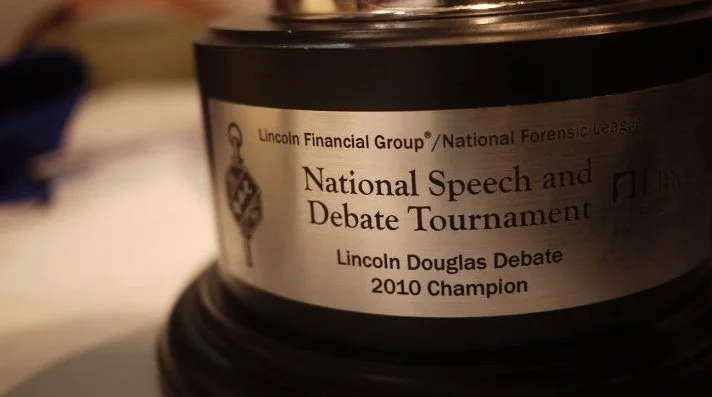
“Mike Bietz was one of the truly exceptional teachers I've had in my life. As coach, he cultivated a team environment that was both encouraging and supportive. He fostered our curiosity and motivated us into hard work. He taught us to navigate the emotions of competition, to ride the highs and lows. Learning to debate was a transformative experience for me. I am forever grateful that Mike Bietz was my coach.”
Ben Sprung-Keyser
Harvard-Westlake '11. Harvard College '15. Rhodes Scholar
Associate Professor, The Wharton School, University of Pennsylvania NSDA Lincoln-Douglas National Champion, 2010, as a junior. World Universities Debating Champion.
WHAT I OFFER THIS SEASON
I know what practice looks like once the season is going: a tournament that weekend, a new topic in two weeks, twelve kids who each need something different, and maybe ninety minutes a week to do all of it on top of running the program. You triage. You work on the cases that are going to be read on Saturday.
Every year there were students who wanted more than that, and parents who could see it. What should we do between now and camp? I never had a good answer, and I do not think most coaches do.
So there are three ways to work with me, and plenty of families use more than one.
The Three Offerings
The LINCOLN-DOUGLAS
Seminar
A class in Lincoln-Douglas. Weekly lectures September through April, plus every lecture recorded and a Slack where students ask me questions during the week. Sold in fall and spring terms, and one option includes twelve one-on-one sessions. Starting at $495 a term (4 months)
PRIVATE 1-on-1 & Small Group SESSIONS
Tutoring in Lincoln-Douglas, Public Forum, World Schools, or Middle School Public Debate. Thirty or sixty minutes, on your schedule, on whatever your student needs that week. One student, or up to four teammates can split the cost. Starting at $180, less in packages and small group
FULL Practice
DEBATE Rounds
A full round with feedback at the end. Booking a round does not include finding you an opponent. You assemble the debaters and get everyone there, and I judge the round. One price covers everyone competing rather than each student, which is what makes it the least expensive thing I offer. Starting at $25 to $90 a debater
Enrolling in the seminar gets you 15% off everything else for the season. Private sessions, practice rounds, all of it.
WHICH ONE IS RIGHT?
Take the Seminar if your student wants to get better at debate generally, not just get ready for Saturday. It is the only place I teach the underlying material in order, week after week, and it runs through the offseason when a student finally has time to absorb it.
Take private sessions if your student competes in something other than Lincoln-Douglas, if their schedule cannot hold a weekly commitment, or if what they need is time on their own work rather than instruction.
Book practice rounds if what your student needs is reps. This is the cheapest thing I offer and the most straightforward: you bring the debaters, I judge the round and tell everyone what I saw.
Use more than one if your student is serious and their program is thin. The seminar gives them the material, private sessions are where we apply it to their own work, and practice rounds are where they get to use it. Live with Office Hours already bundles the first two at a better rate than buying them separately, and seminar enrollment takes 15% off anything else you book for the rest of the season.
If you are not sure, book a consultation. Tell me about your student and I will tell you what I think, including if the answer is that none of this is what they need right now.
I spent my career running school programs. For thirty years I was the one triaging practice, entering the tournament, finding judges, and answering the emails, and I know what it feels like when a family goes looking for outside help.
I also know I never had a place I trusted to send them. Every year there were students who wanted more than I could give them in a room with twelve other kids, and parents who asked me where to go. I never had a good answer. That is what I built this to be.
So the promise is simple. Your student competes for you. Nothing I do replaces you, competes with you, or teaches a student to work around you. If my advice ever conflicts with yours, I tell them to follow yours.
I am not here to make your job harder. I am here so that when a family asks you where to go, you have somewhere to send them.
How I work with your school program
If you coach a student enrolled in the seminar, you can have the syllabus, the lecture recordings, and the handouts for that term at no cost. You do not have to ask each time. I would welcome your input on what to cover, and if there is something your students keep struggling with, tell me and I will build a lecture around it.
And if you have a question about anything in this activity, ask me, whether or not you have a student here.
"[Bietz] has mentored dozens of coaches and given countless debate educators their starts working at debate camp or as program assistants. I am one such person. I would not have the great privilege of doing what I love for a living if Bietz had not trusted me, recommended me, and hired me multiple times before I had any credentials of note."
Adam Torson
Director of Debate, Marlborough School
From his speech inducting Mike into the Tournament of Champions Hall of Fame, 2024
FrEQUENTLY ASKED QUESTIONS
-
Lincoln-Douglas, Public Forum, World Schools, and Middle School Public Debate. The seminar is Lincoln-Douglas only. I have also worked with students in Big Questions, Student Congress, and International Public Policy Forum, though those are not my main competency.
-
Middle and high school students. Some are just starting, some are chasing championships. If you are unsure whether the level is right, book a consultation.
-
Weekday evenings at 6:00pm Pacific. Fall Term runs September 1 to December 31. Spring Term runs January 1 to April 30. Full details
-
Buy a block of hours and book through my calendar, or book a single session without a package. Thirty or sixty minutes, whichever the week calls for.
To help with cost, you can add up to three additional students for a small fee. Full details -
You bring the debaters and I judge the round. Whoever books it is responsible for getting everyone there on time. Full details
-
No. Practice rounds are open to anyone.
-
Email me. The Library tier of the seminar is $495 a term and gets your student every lecture and the Slack. If that is still out of reach, write anyway. I would rather work something out than have a student miss the season.